Not all stress is bad. Some is the fuel that sharpens your focus, memory, and decision-making — until it stops being short-term.

Darryl Blake
May 28, 2024
Stress
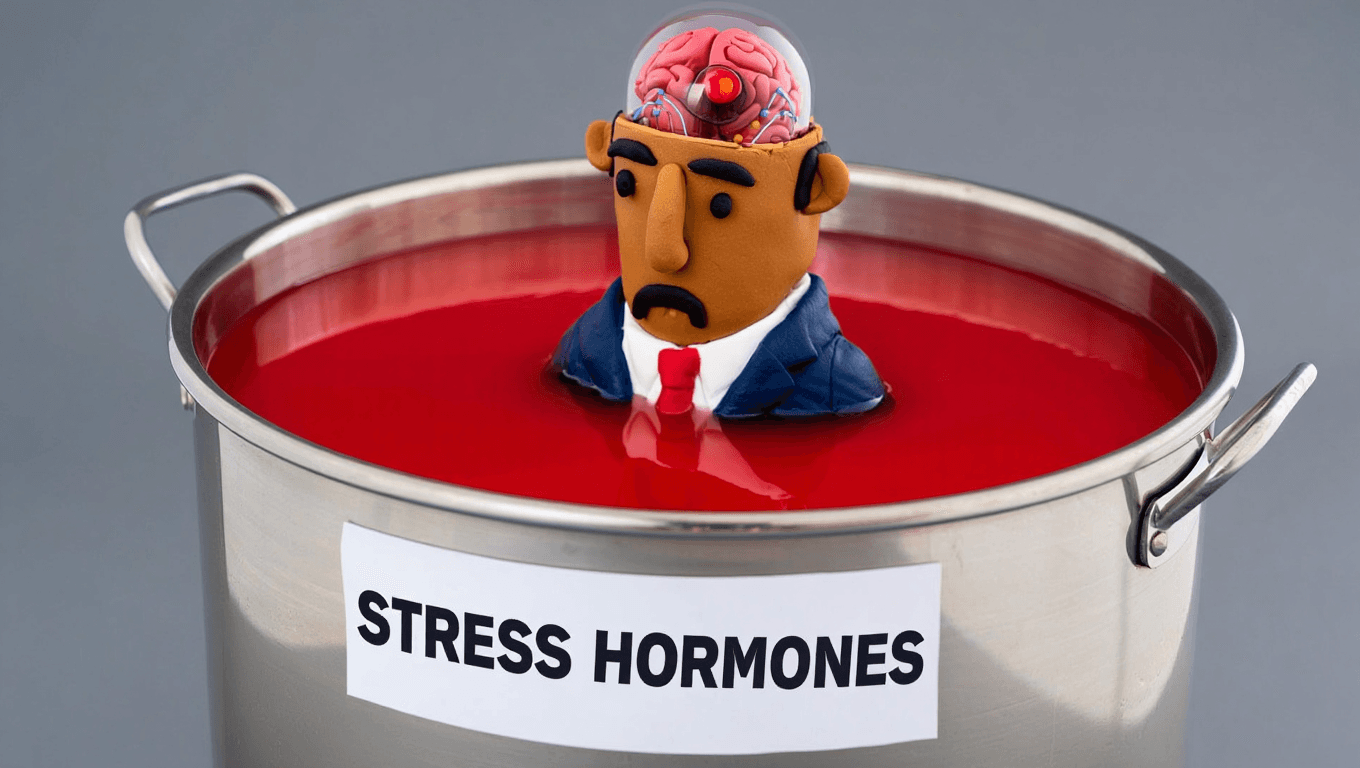
The cortisol paradox
Executives often hear cortisol described as the enemy — the “stress hormone” that ruins your health and drains your brain. But the story is far more nuanced. Cortisol isn’t inherently bad. In fact, your body depends on it for survival, peak performance, and adaptability. The trick is understanding when stress helps — and when it starts to sabotage you.
Cortisol 101: The brain-body stress messenger
Cortisol is produced by the adrenal glands as part of the hypothalamic-pituitary-adrenal (HPA) axis, your body’s central stress management system. When a challenge arises — a high-stakes meeting, a tight deadline, a critical decision — cortisol:
Boosts glucose availability to fuel your brain
Enhances alertness and memory consolidation
Optimises cardiovascular function for rapid action
This is your acute stress response — the short-term cortisol spike that keeps executives sharp under pressure. In moderation, it’s adaptive, not destructive.
When cortisol turns from an ally to a saboteur
Problems arise when stress stops being episodic and becomes chronic. Persistent cortisol elevation:
Shrinks the hippocampus, impairing memory and learning
Dulls prefrontal cortex activity, reducing judgment and emotional regulation
Disrupts sleep architecture, amplifying fatigue and cognitive fog
In short, your body is still in “fight-or-flight,” but your brain and productivity pay the price. Chronic stress becomes self-perpetuating, creating what researchers call the “stress loop,” where sleep disruption and impaired decision-making further fuel cortisol release.


The sweet spot - using stress to your advantage
Here’s the paradox: you want stress — just not all the time. The key is timing and recovery. Executives who harness cortisol effectively:
Front-load high-focus tasks – Tackle complex decisions or creative work when cortisol peaks naturally in the morning.
Schedule deliberate recovery – Short bouts of mindfulness, breathwork, or active movement signal your nervous system that danger is over.
Track your physiological state – HRV, sleep quality, or even simple journaling provides early warning that stress is tipping from helpful to harmful.
By respecting the natural rhythm of cortisol, you can amplify performance without triggering burnout.
The take-away - stress isn't the enemy, mismanagement is
Cortisol isn’t your adversary. It’s a sophisticated chemical messenger that can enhance your executive performance — or, if left unchecked, quietly erode it.
Smart leaders learn to ride the cortisol wave, leveraging it for focus and energy while prioritising recovery to maintain resilience and clarity.