Burnout isn’t failure — it’s a feedback loop between brain and body that keeps replaying until you rewrite the code.

Darryl Blake
Feb 2, 2025

The Executive Burnout Loop
Executives often describe burnout as something that “crept up” on them — one too many quarters, one too many crises, one too few breaks. But neuroscience suggests something more precise: burnout is a self-reinforcing biological loop. Once chronic stress hijacks your brain and physiology, it begins to maintain itself automatically.
The good news? Once you understand the loop, you can interrupt it — and recovery becomes not just possible, but predictable.
The Science of the Burnout Loop
Burnout begins as stress, but ends as system dysfunction. It’s driven by the HPA axis — the hypothalamic–pituitary–adrenal circuit that regulates cortisol. Under normal circumstances, stress activates the HPA axis, cortisol rises, then falls once safety returns.
But when the system is constantly triggered — endless deadlines, emotional load, no recovery time — cortisol stays elevated. Over weeks or months, this creates a cascade:
Cortisol Resistance – Cells stop responding efficiently to cortisol, just as they do with insulin in metabolic syndrome. Your body loses its ability to regulate energy and inflammation.
Hippocampal Shrinkage – High cortisol damages neurons in the hippocampus (memory, learning) and disrupts sleep architecture.
Reward System Blunting – Dopamine signaling drops, so achievements stop feeling rewarding — one of the hallmark symptoms of burnout.
Chronic Exhaustion Loop – Poor sleep, low motivation, and cognitive fog create stress about being burned out, which reignites the HPA axis.
That’s the burnout loop: stress creates dysfunction, which creates more stress.
Why Recovery Feels Impossible
When you’re in the loop, even rest can feel unrefreshing. You take time off, but the fatigue doesn’t shift. This isn’t weakness — it’s neurobiology.
Your nervous system is still in “threat mode.” Even in bed or on vacation, sympathetic activation keeps your body vigilant.
Your brain has lost reward sensitivity. With dopamine down, even restorative activities don’t register as pleasurable, so motivation to rest collapses.
Your inner critic interferes. The voice that says, “You can’t slow down now” or “You’re falling behind” keeps the cortisol loop alive.
The result: a sense of psychological stuckness, where the idea of rest feels like just another stressor.
Breaking the Loop: A Biological Approach to Recovery
To escape burnout, you must reset the feedback loop, not just “relax.”
Here’s what works — and why:
1. Micro-Recoveries, Not Marathons
The nervous system doesn’t need long absences — it needs frequent cues of safety.
Take 3–5 short breaks daily: slow breathing, walk outside, stretch, or change posture. Each break acts as a “mini reboot” for the vagus nerve, signalling the brain that the environment is safe.
2. Sleep as Strategy, Not Reward
Sleep isn’t a passive act; it’s a biological repair cycle. Establish strict consistency — same bedtime, same wake time — to re-entrain your circadian rhythm. The hippocampus and amygdala recover their size and balance only through deep sleep.
3. Active Recovery Over Passive Distraction
Netflix, alcohol, or scrolling don’t qualify as recovery — they’re avoidance. Active recovery engages the parasympathetic system: walking outdoors, slow swimming, breathwork, journaling, or any deliberate movement that shifts focus from “doing” to “being.”
4. Recalibrate Dopamine with Novelty
Introduce small, novel experiences: a new walking route, different music, a short creative project. Novelty spikes dopamine naturally and rebuilds motivation.
5. Silence the Inner Taskmaster
Your inner asshole — the one that equates rest with laziness — is your burnout’s best friend. Replace “I can’t stop now” with “Recovery is how I stay capable.” Cognitive reappraisal strengthens the prefrontal cortex’s regulation of the stress response.

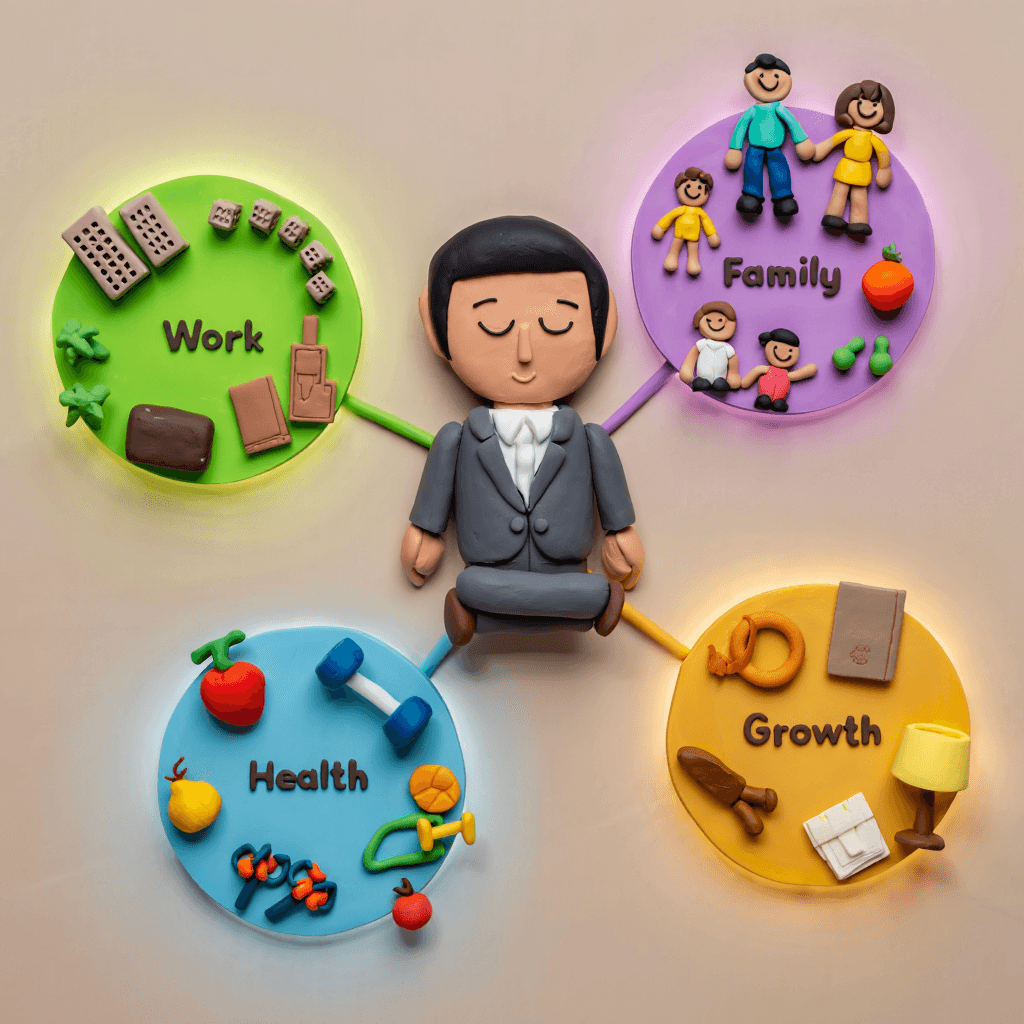
The leadership cost of staying in burnout
Unresolved burnout doesn’t just harm the individual; it distorts leadership.
Empathy drops: Chronic stress dulls emotional sensitivity.
Vision narrows: The prefrontal cortex focuses on short-term safety instead of strategic insight.
Culture erodes: Your stress becomes the organization’s default tone.
Breaking your own burnout loop is the first step in breaking the organisational burnout loop.